Some links in this article are affiliate links. We may earn a commission if you sign up or make a purchase. This supports our content at no extra cost. As an Amazon Associate we earn from qualifying purchases.
The conversation around AI writing tools often falls into a predictable, binary debate: Will they replace human writers, or are they just a passing fad? The truth, as is often the case, is far more nuanced and exciting. The most effective writers aren’t being replaced; they’re evolving. They’re moving beyond using AI as a simple content factory and are instead mastering the art of human-AI collaboration.
Simply asking an AI to “write a blog post about X” and then hitting publish is a recipe for generic, soulless content that fails to connect with audiences and may even be penalized by search engines. The real power of these tools is unlocked when you treat them not as an outsourcer, but as a tireless, infinitely creative junior partner. This post will guide you through a strategic framework to elevate your use of AI from simple generation to true creative synergy.
The AI Writing Spectrum: From Assistant to Partner
To collaborate effectively, you first need to understand the different roles an AI can play in your writing process. It’s not an all-or-nothing tool. Think of it as a spectrum of involvement, where you, the human writer, are always in the director’s chair.
The Spellchecker on Steroids (Assistant Role)
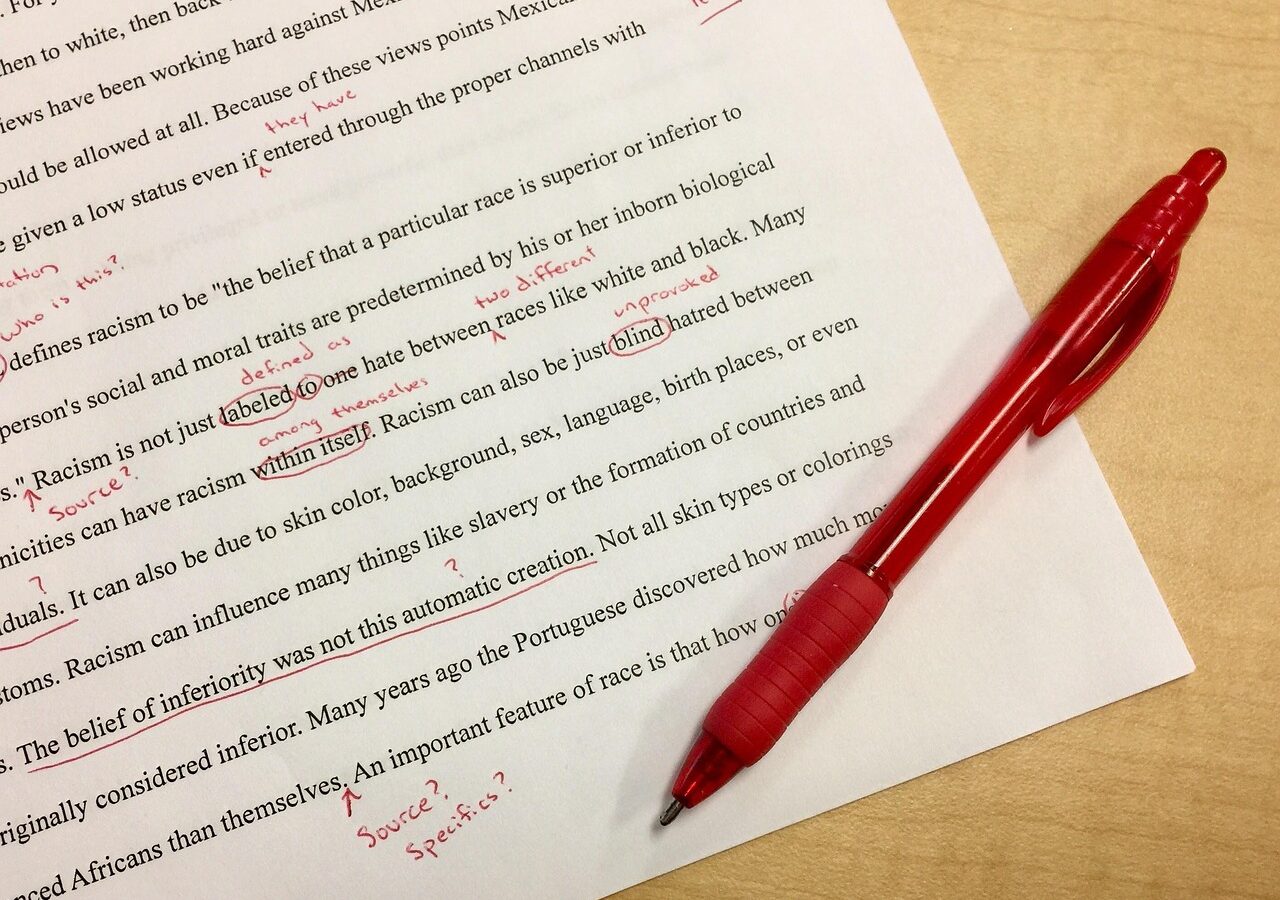
This is the most basic level of collaboration. Tools like Grammarly have used AI for years to go beyond simple spell-checking. Modern AI writing tools can act as sophisticated editors, suggesting improvements for clarity, conciseness, and tone. You can paste your human-written text and ask for feedback: “Make this paragraph more persuasive,” or “Rephrase this to sound more professional.” It’s your writing, just refined by an AI assistant.
The Brainstorming Buddy (Ideation Role)
Writer’s block can be a significant bottleneck. Here, AI excels. Instead of staring at a blank page, you can use AI as an ideation engine. It can generate dozens of blog post titles, create detailed outlines from a single keyword, or propose unique angles for a familiar topic. The key is to use this as a starting point. The AI provides the raw material (divergent thinking), and you provide the strategic filter (convergent thinking) to select and refine the best ideas.
The First Draft Factory (Generation Role)
This is the most common—and most dangerous—use of AI. Yes, tools like ChatGPT can produce a full draft in seconds. While tempting, using this output as anything more than a rough scaffold is a mistake. This raw draft lacks unique insights, personal anecdotes, and a genuine voice. Treat it as a collection of sentences and paragraphs that you must now completely deconstruct and rebuild with your own expertise.
The Research Synthesizer (Partner Role)
In its most advanced role, AI can act as a research partner. By feeding it academic papers, reports, or articles, you can ask it to summarize key findings, identify recurring themes, or extract specific data points. This can dramatically accelerate the research phase. However, this role comes with a critical caveat: always verify the source. AI models can “hallucinate” or misinterpret information, so you must treat their summaries as clues, not conclusions, and always go back to the original material for fact-checking.
Common Pitfalls and How to Avoid Them
Embracing AI without understanding its limitations is like navigating a minefield. Many creators fall into common traps that diminish their content’s quality and impact. Here’s how to sidestep them.

The Trap of the “Good Enough” Draft
The biggest pitfall is accepting the AI’s first draft as “good enough” and only performing a light edit. AI-generated text is often grammatically correct and logically structured, but it’s also generic. It’s the average of all the text it was trained on. To create exceptional content, you must aggressively rewrite, inject personal stories, add expert analysis, and challenge the AI’s points with your own unique perspective.
- Actionable Tip: Implement a “50% rule.” Aim to rewrite or replace at least 50% of any AI-generated draft. This forces you to add substantial human value.
Losing Your Authentic Voice
If all your content is produced by the same AI models, it will start to sound like everyone else’s. Your unique voice is your most valuable asset. To avoid this, you need to train the AI on your style.
- Actionable Tip: Create a “Voice & Tone Style Guide” document. Include examples of your writing, your brand’s core messaging, and specific words you like to use or avoid. Paste this into the AI’s context window before every request to guide its output toward your unique style.
The Hallucination Hazard
AI models are not databases; they are prediction engines. They will confidently state incorrect facts, invent sources, and make up statistics. This is often called “hallucination.” Publishing unverified AI-generated information can destroy your credibility.
- Actionable Tip: Adopt a “trust but verify” policy for every single fact, statistic, or claim the AI makes. If it cites a source, find the original. If it gives you a number, find a reputable report to back it up. There are no shortcuts to accuracy.
A Strategic Framework for AI-Human Collaboration
To truly harness the power of AI, you need a structured workflow that leverages the strengths of both human and machine. This four-step process ensures quality, authenticity, and efficiency.
Step 1: Human-Led Strategy and Briefing
Your work begins long before you write the first prompt. The AI cannot understand your business goals, your target audience’s pain points, or your content strategy. You must define these elements first.
- Create a Detailed Content Brief: Specify the target audience, primary keyword, key questions to answer, desired tone of voice, and a call-to-action.
- Feed the Brief to the AI: A detailed brief is the foundation of a good prompt. The more context you provide, the more relevant and useful the AI’s output will be.
Step 2: AI-Assisted Ideation and Outlining
With your brief in hand, use the AI to explore possibilities. Ask for 20 different headlines. Request three different outlines: one for beginners, one for experts, and one with a contrarian view. This is the brainstorming phase where the AI’s speed is a massive advantage.
Step 3: Iterative Drafting and Expansion
Instead of asking for a full draft at once, build the article piece by piece in a conversational flow. This is the core of the collaborative process.
- Write the introduction yourself to set the tone and thesis.
- Ask the AI to expand on your first major point from the outline.
- Rewrite the AI’s output, infusing it with your own examples and insights.
- Move to the next point, creating a feedback loop where you write, the AI expands, and you rewrite.
Step 4: The Human-Only Polish and POV
This final step is non-negotiable and must be 100% human. Read the entire piece from start to finish. This is where you smooth out transitions, add personal anecdotes, insert a strong, opinionated conclusion, and ensure the entire article flows with a single, authentic voice. It’s the step that turns a good article into a great one.
Essential Gear for a High-Performance Workflow
An effective AI-assisted writing process requires more than just a subscription to a tool. Your physical and digital environment plays a crucial role in maintaining efficiency and focus, especially during the intense human-led editing and rewriting phases.

A seamless workflow with multiple browser tabs, AI tools, and research documents open simultaneously demands a powerful machine. A device like the Apple 2026 MacBook Air 13-inch Laptop with M5 chip is designed for these kinds of AI-heavy tasks, ensuring you’re not slowed down by lag. When it’s time for the deep focus required in the final polishing stage, blocking out distractions is key. A pair of Sony WH-1000XM5 Noise Cancelling Headphones can create a bubble of concentration, allowing you to fully immerse yourself in the text. For those long writing and editing sessions, ergonomic tools like a Keychron K2 Mechanical Keyboard and a Logitech MX Master 3S mouse can prevent fatigue and keep you comfortable.
Finally, mastering the art of collaboration means continuous learning. To deepen your understanding of how these models work and how to instruct them better, consider dedicated resources. Books like the ChatGPT Mastery Book and the Prompt Engineering Handbook provide structured knowledge that can take your skills to the next level.
Conclusion: Your New Role as an AI-Augmented Writer
AI writing tools are not a threat to skilled writers; they are a force multiplier. They can eliminate the tedious aspects of content creation, freeing up your cognitive resources for what truly matters: strategy, creativity, critical thinking, and building a genuine connection with your reader. By moving beyond the role of a simple user and becoming a skilled collaborator, you can produce higher quality content faster than ever before.
The future of writing isn’t human vs. machine. It’s the writer who has mastered the human-AI partnership. Embrace this new synergy, and you won’t just keep up—you’ll lead the way.